Marine
·
— 14 min read
Winter boat service: a charter fleet plan

Winter boat service at a charter base starts with a list nobody wrote down in one place. The faults from the season sit in check-out reports, skipper messages, damage reports and in the head of the technician who patched a pump in August and said he would replace it over the winter. November is the month when the list still comes together, because people remember every boat and there is enough time before the first check-in to order parts.
This post shows how the service manager of a charter fleet turns the season's faults into a winter works plan per boat. You get a plan table for one boat, a rule for ordering items by parts and travel lift slot, a way to count deadlines backwards from the first check-in, and a sample work order. The last part describes how the same plan runs in Serwizz, so every item has an owner, a deadline and a record of the work done.
The task list for winterization itself, from protecting the cooling circuit to disconnecting the batteries, is covered in our post on the boat winterization checklist and haul-out work order. This post is about what comes after: the repairs and services due before the first guest steps on deck.
Why winter service of a charter fleet runs late every year
Winter at a charter base looks like a long stretch without guests, so time seems plentiful. The delay still starts in November and December, when nobody knows exactly what needs doing on which boat.
The season's fault list sits in five places
During the season a boat comes back on Saturday morning and leaves with new guests the same day. In those few hours the technician fixes whatever prevents departure and postpones the rest. A postponed item ends up wherever someone had time to write it: on a paper check-out form, in a message to the base manager, in a photo on a phone or in a notebook.
By November some of those notes are lost, and some are unreadable to anyone but their author. A July note saying "bow WC" does not tell you whether the pump was weak, whether it leaked, or whether a guest only reported a bad smell. The technician who knew is often a seasonal worker who returns in April.
Serwizz customers described the same pattern in interviews. Before they introduced the system they ran the work on paper work orders, WhatsApp photos and messages, and Excel sheets, and the benefit they rated highest was seeing active tasks and documentation in one place at any moment.
Parts and the travel lift slot set the order of work
Winter jobs do not get done in the order they were written down. A shaft seal gets replaced only while the boat is on the hard, so it depends on a travel lift slot the base shares with other marina users. An anchor windlass or a fridge part gets ordered from a supplier, and the supplier's winter lead time is outside your control.
When the service manager does not separate the items waiting for a part from the items waiting for the lift, technicians spend December on whatever is at hand. Small repairs get finished, while the big items wait for an order nobody sent.
What happens when the plan gets made in March
In March the seasonal workers return, the boats go back in the water and preparations for the first guests begin. Only then does the base find out a part was never ordered, the lift slot is taken and three boats are waiting for the same electrician. A job which was one work order in January becomes an urgent call-out a week before check-in.
The cost lands on the guest who takes over a boat with a temporary fix and on the base, which sends a technician out after the boat in the first week of the season. The temporary fix from August then lives through a second season.
How to build a winter service plan per boat
A winter service plan is a list of items for each boat, where every item has a system, a source, the part needed, a mark for whether it needs the travel lift, and a deadline. It takes six steps, and the first four fit into one week of November.
Step 1: collect every fault from the season in one list
Start by gathering every source: check-out forms, damage reports, messages from skippers and guests, technician notes and the list of temporary fixes. For each boat, sit down for ten minutes with the technician who took it over most often during the season and write down what is not on paper.
Every item gets one row, even when it looks minor. A broken locker latch and a leaking shaft seal are equal at this step, because sorting comes later.
Step 2: sort the items by boat and system
Group the items by boat, and within each boat by system: engine and drive, electrics, sanitation and water, deck and equipment, sails, hull. You see at once which boat has the longest list and which system repeats across the fleet.
Repetition shows what to replace preventively. If the same pump failed on four boats of one model, the fifth boat gets a preventive replacement and the part is ordered for all five.
Step 3: mark what waits for a part and what waits for the lift
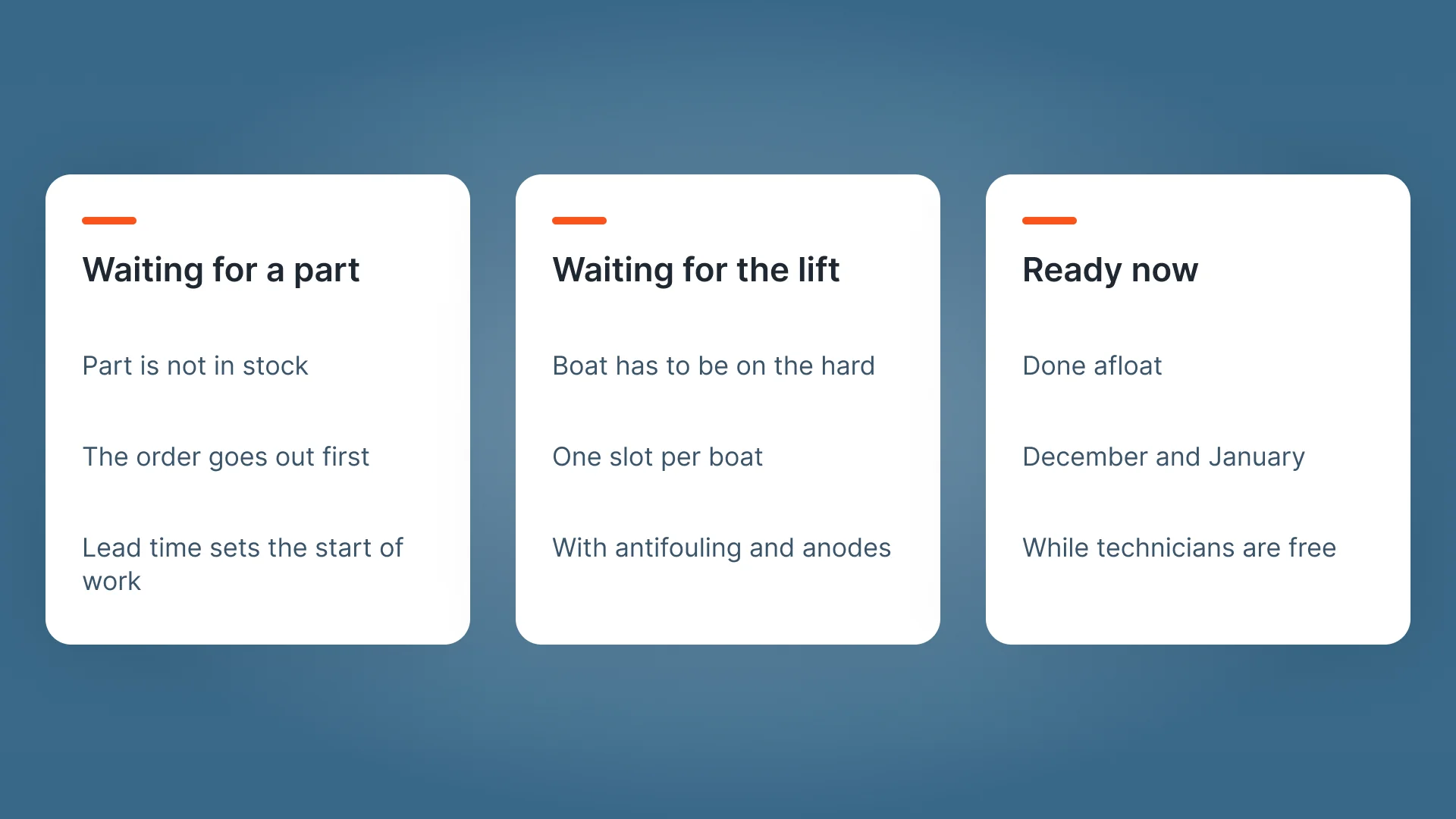
Next to every item, write two answers: does it need a part missing from stock, and does the boat have to be on the hard. Those two answers produce three groups.
- Items waiting for a part go first in the ordering queue, regardless of when the work happens.
- Items waiting for the lift are collected into one slot per boat, together with antifouling and anodes.
- Items ready now are done afloat in December and January, while technicians are free.
An item with an unclear fault gets its own row for diagnostics. The part is ordered only after the technician finds the cause, so diagnostics has to happen early.
Step 4: count deadlines backwards from the first check-in
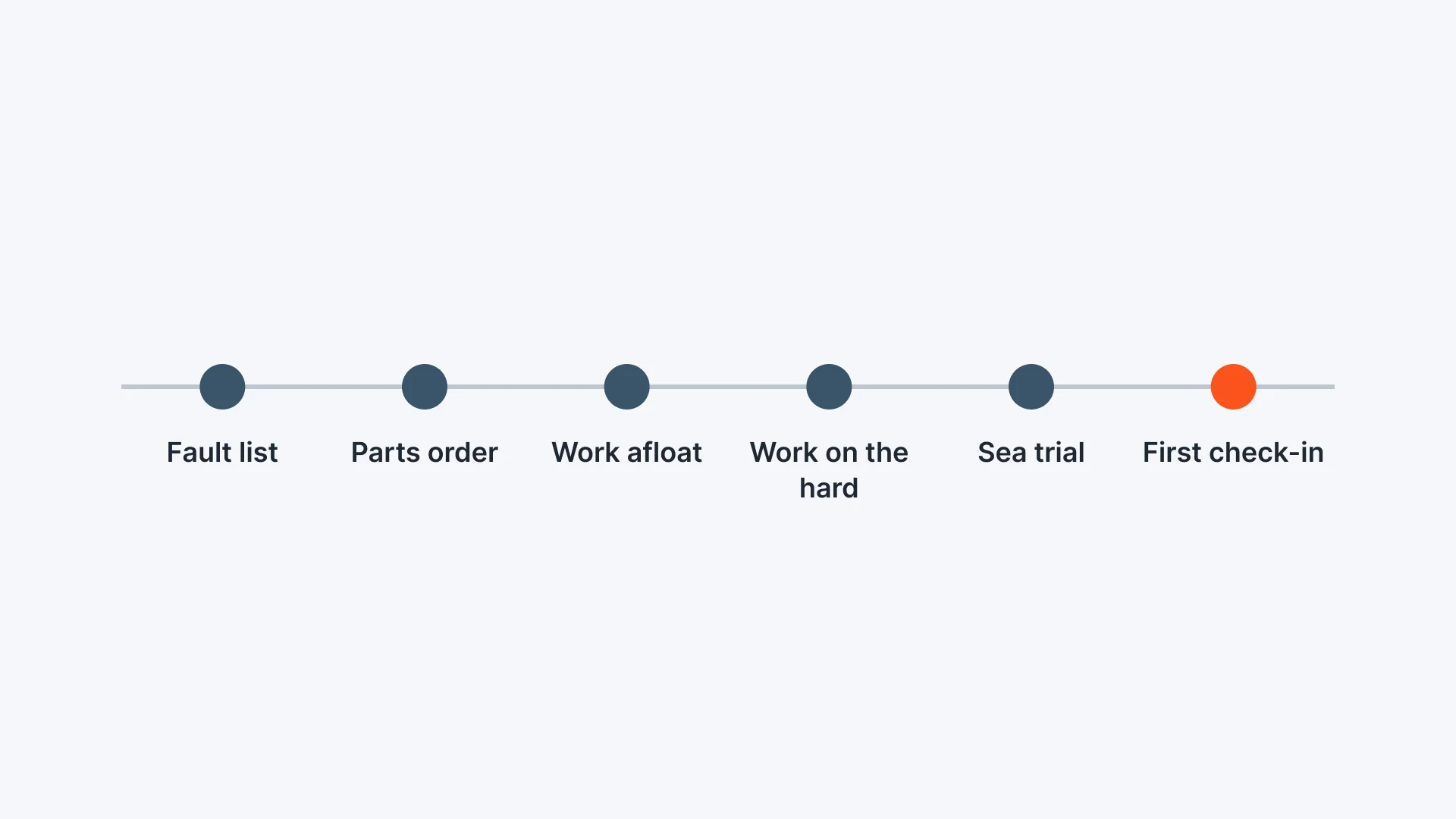
Every boat has a date for its first check-in of the new season, and it is the only deadline you are unable to move. Count backwards from it:
- The last week before check-in is left for cleaning, equipping and the final inspection.
- Before it come the launch and the sea trial, which checks everything repaired over the winter.
- Work on the hard has to be finished before the launch, and antifouling also needs dry weather.
- Work afloat ends before the lift slot, so technicians on the hard do only the jobs impossible to do any other way.
- A part order goes out no later than the supplier's confirmed lead time before the work starts.
This count often shows an order for work planned in February has to go out in November, so the plan needs to be ready before the holidays.
Step 5: enter the plan in a table and open the work orders
The table below is a sample plan for one 14-metre sailing yacht. The items are made up for the example, and the columns are yours to reuse as they are.
| Item | System | Source | Part | Lift | Deadline |
|---|---|---|---|---|---|
| Leak at the shaft seal | Engine and drive | check-out, August | seal, to order | yes | before launch |
| Bow WC pump is weak | Sanitation | skipper report | service kit, in stock | no | December |
| Anchor windlass stops now and then | Deck | check-out, September | after diagnostics | no | diagnostics in December |
| Torn seam on the genoa | Sails | check-out, September | external sailmaker | no | hand over in November |
| Scratch on the port side | Hull | damage report | repair material | yes | with antifouling |
| Fridge does not cool at the berth | Electrics | guest report | after diagnostics | no | January |
| Regular engine service | Engine and drive | maintenance plan | oil, filters, impeller | no | February |
| Antifouling and anodes | Hull | maintenance plan | antifouling, anodes | yes | ahead of launch |
Add a column with estimated hours if you like, filled in from your own workshop's experience. The sum of hours per month shows whether the base has enough people or part of the work needs to go to an outside service.
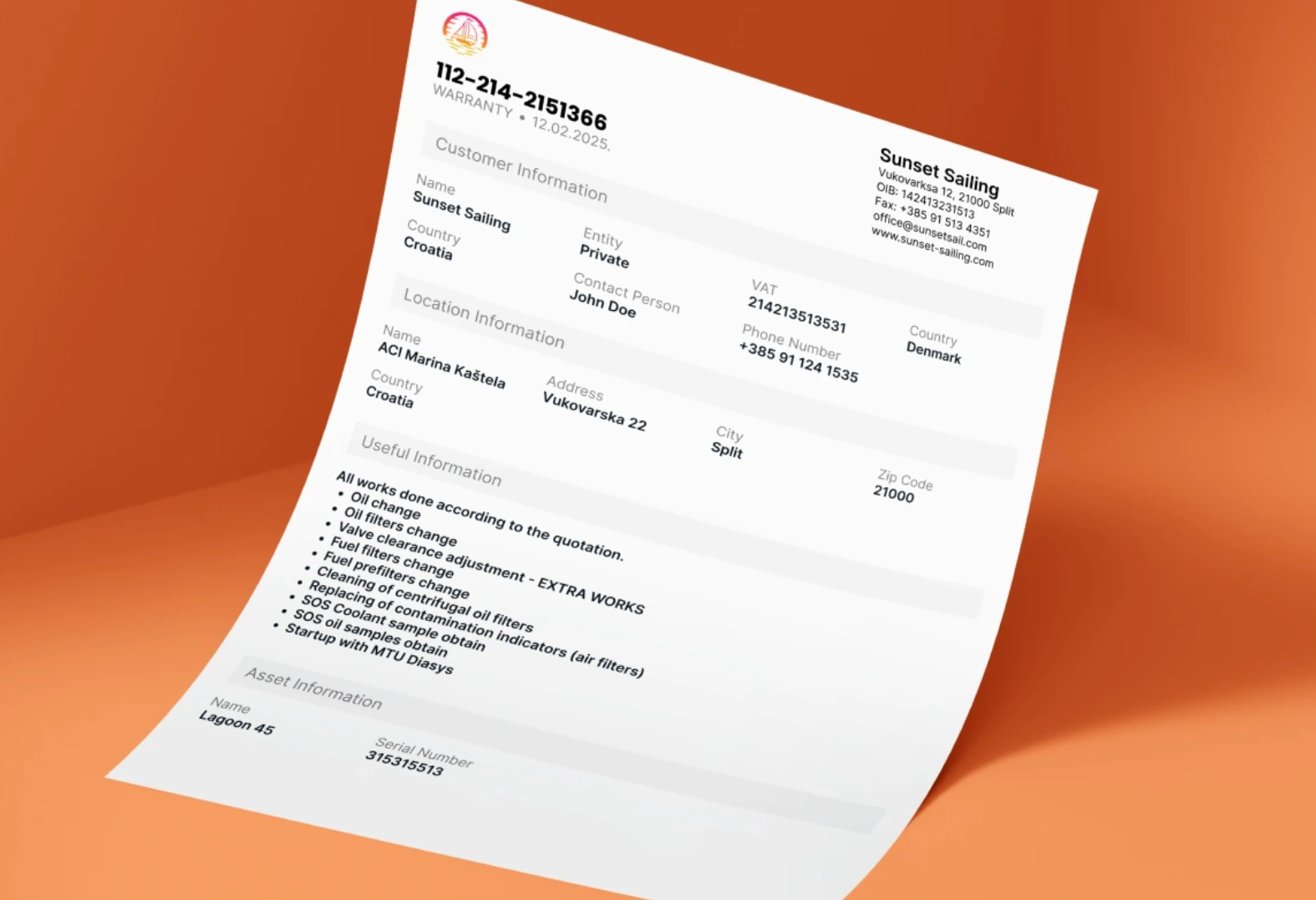
Each row becomes one work order, and items done in the same lift slot are fine to merge. A sample work order for the first row:
Work order: Shaft seal replacement, 14 m sailing yacht Source: check-out report from August, bilge photo attached Preconditions: seal ordered and received, boat on the hard Slot: same lift slot as antifouling and the port side repair Responsible: base mechanic, confirmed by the service manager Closing: photo of the new seal, check on the sea trial, entry in the boat's history
A blank form for a work order like this one is in the free work order template.
Step 6: review the plan once a week
The plan changes as soon as the first part arrives or a lift slot moves, so it needs a review once a week. At the review, answer three questions: which part has arrived, which work order is closed, and which boat is behind its launch date. A new item a technician finds during the work enters the plan as a new row with the same columns.
How it works in Serwizz
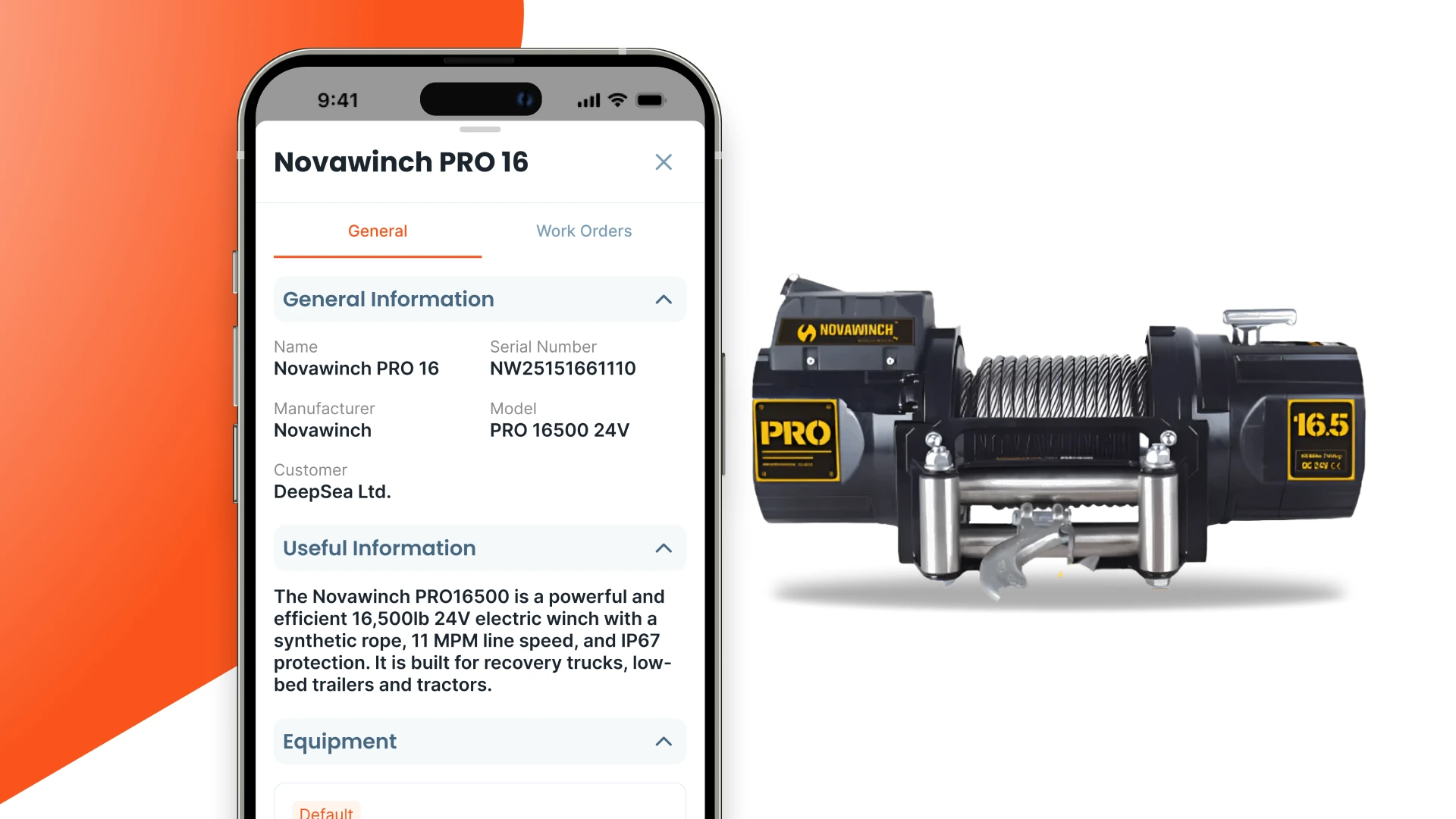
Serwizz is a CMMS opened in the browser as a PWA, with no app store download, so the technician on the pontoon and the manager in the office look at the same plan. Every boat is kept as an asset, and asset management holds its history of faults and work from every season.
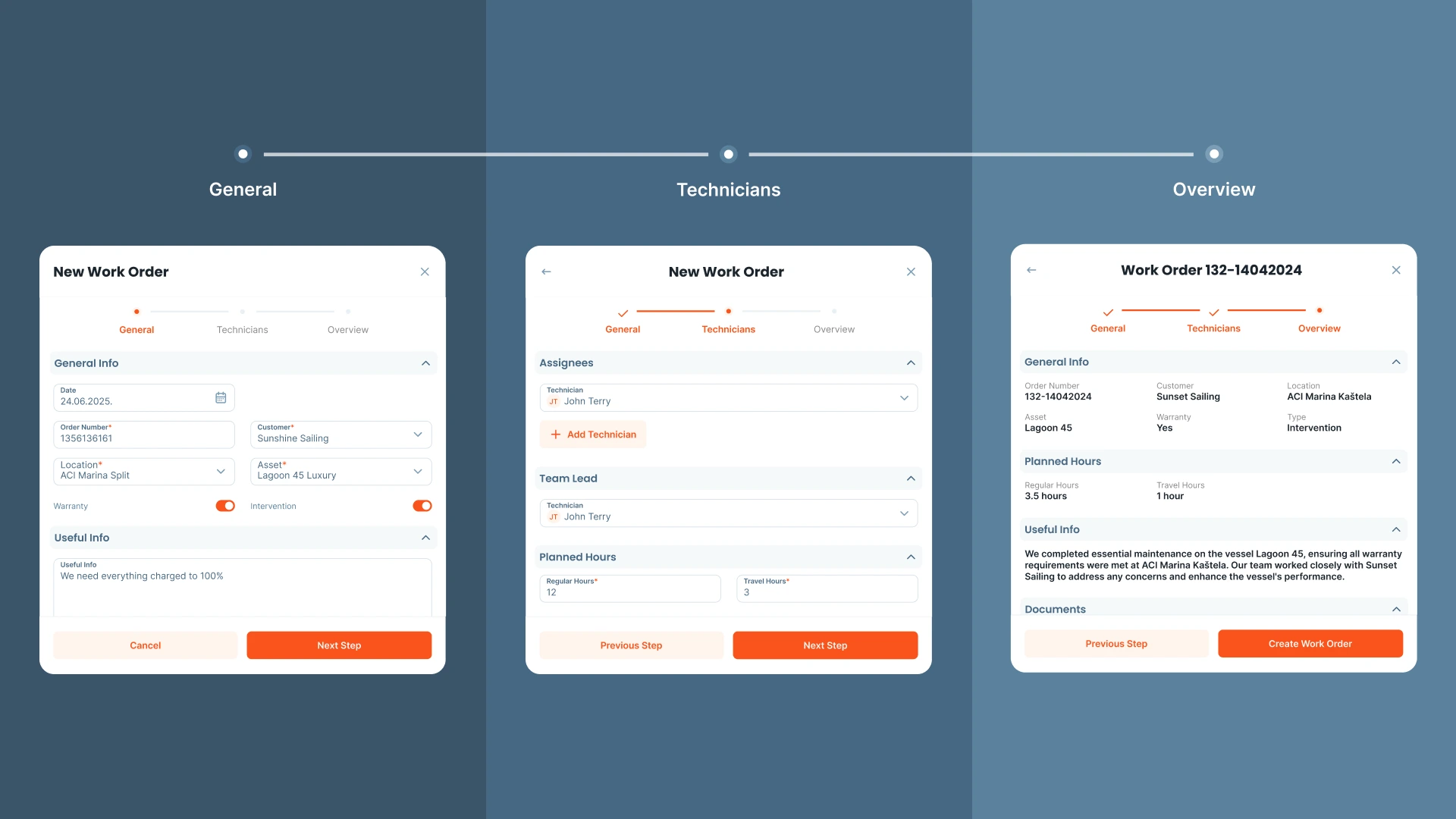
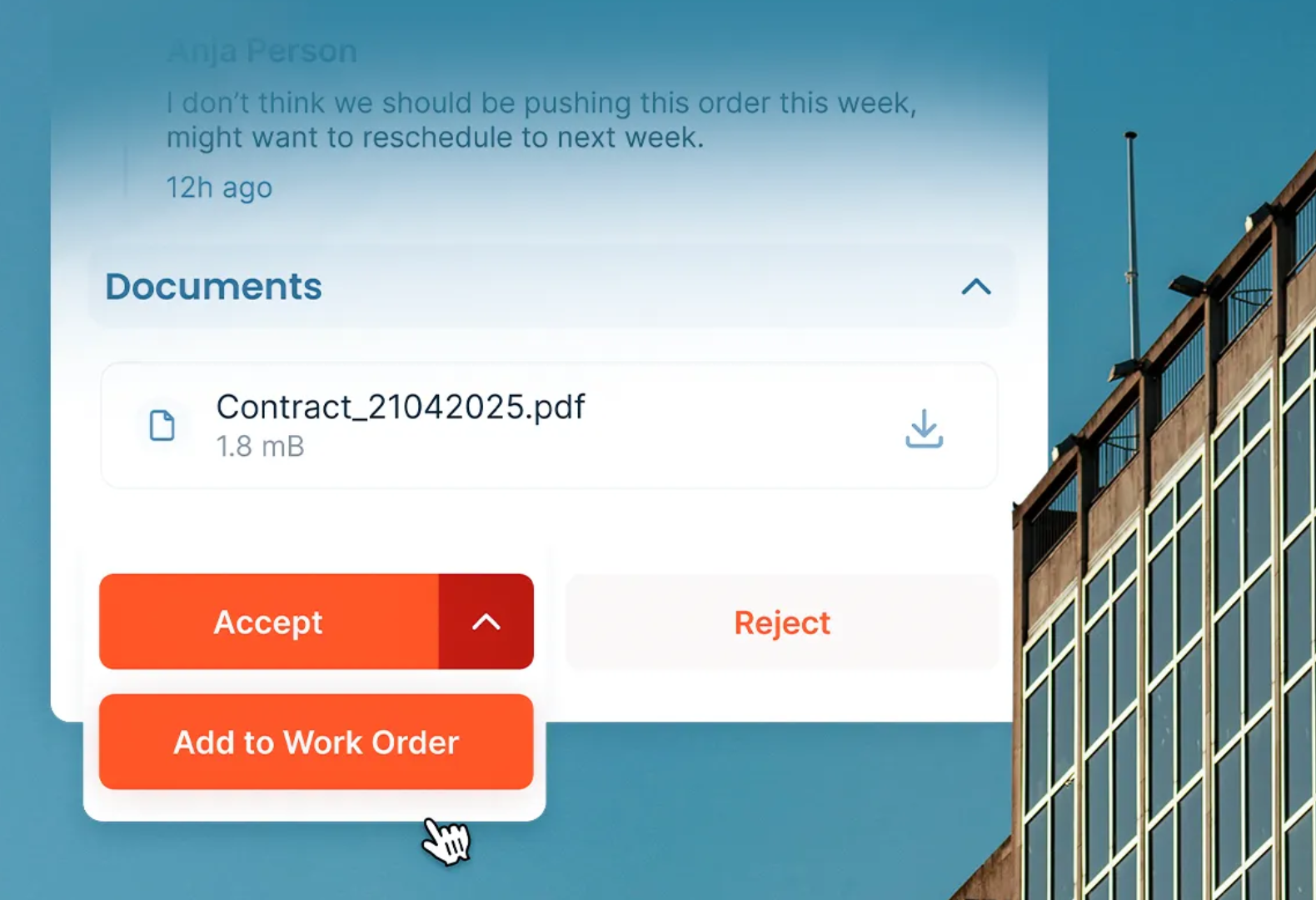
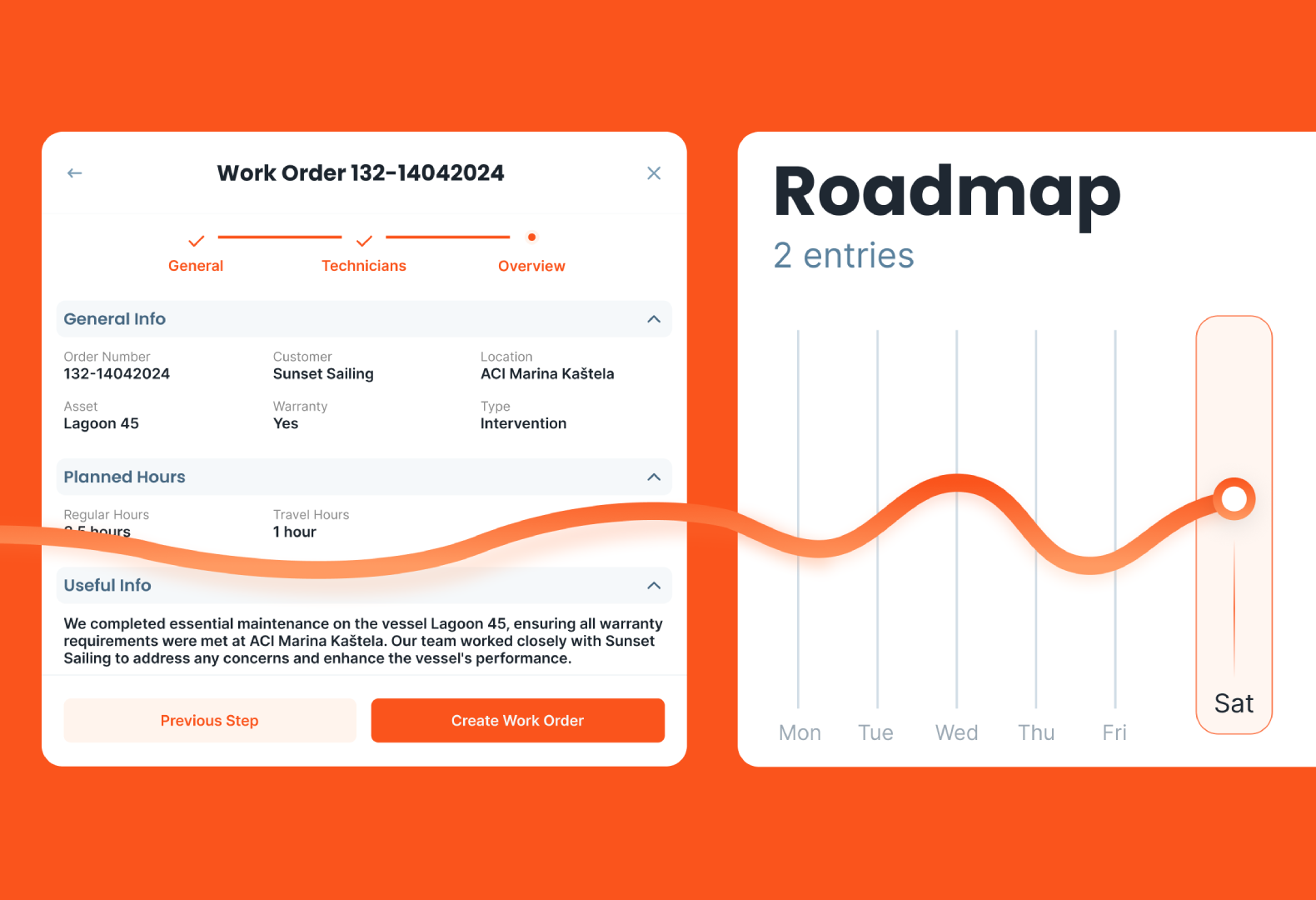
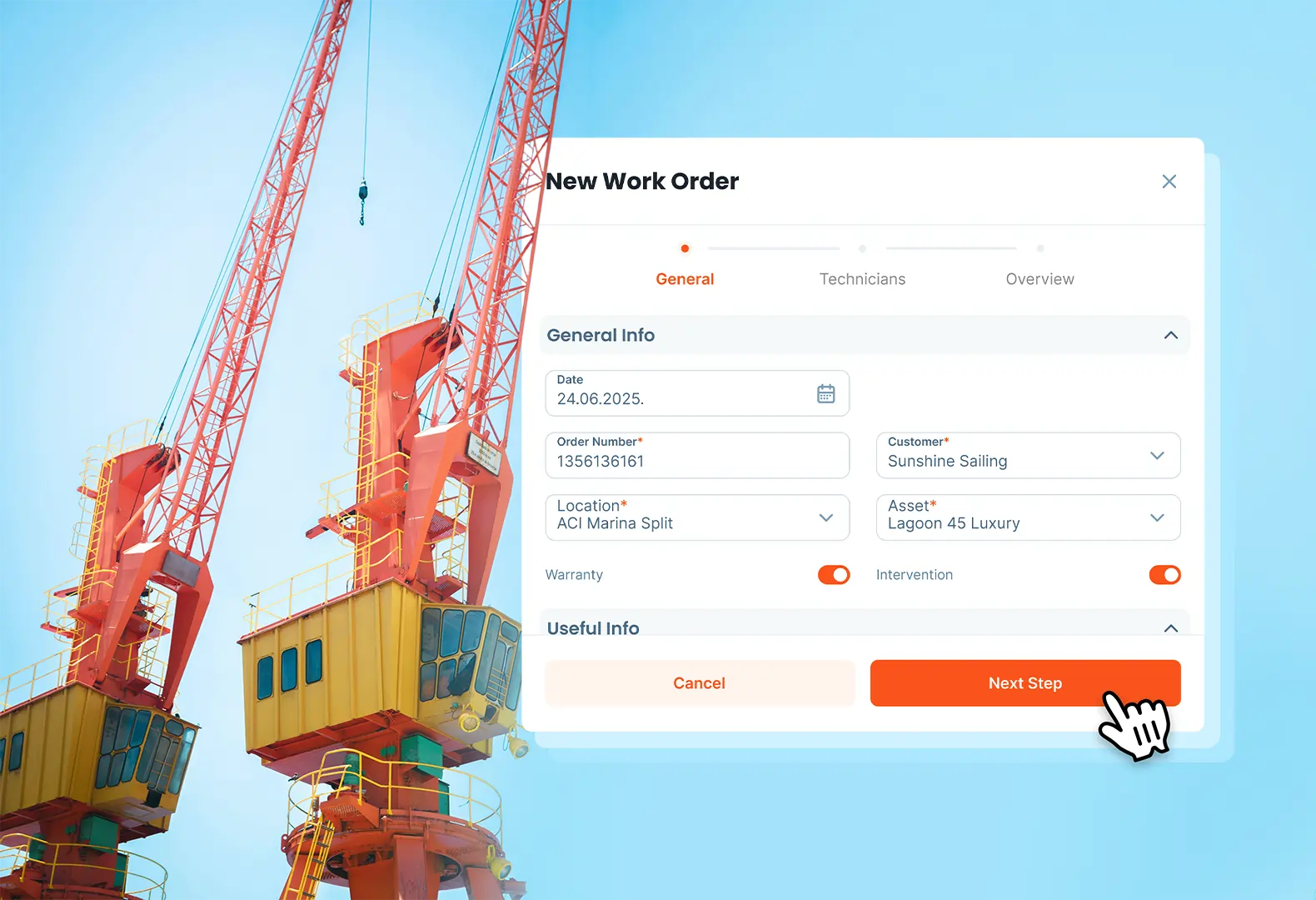
Faults from the season come in as work requests linked to the boat, with a photo and a description, at the moment base staff notice them at check-out. In November the service manager reviews the requests per boat and turns them into work orders, so the first step from this post no longer means collecting paper.
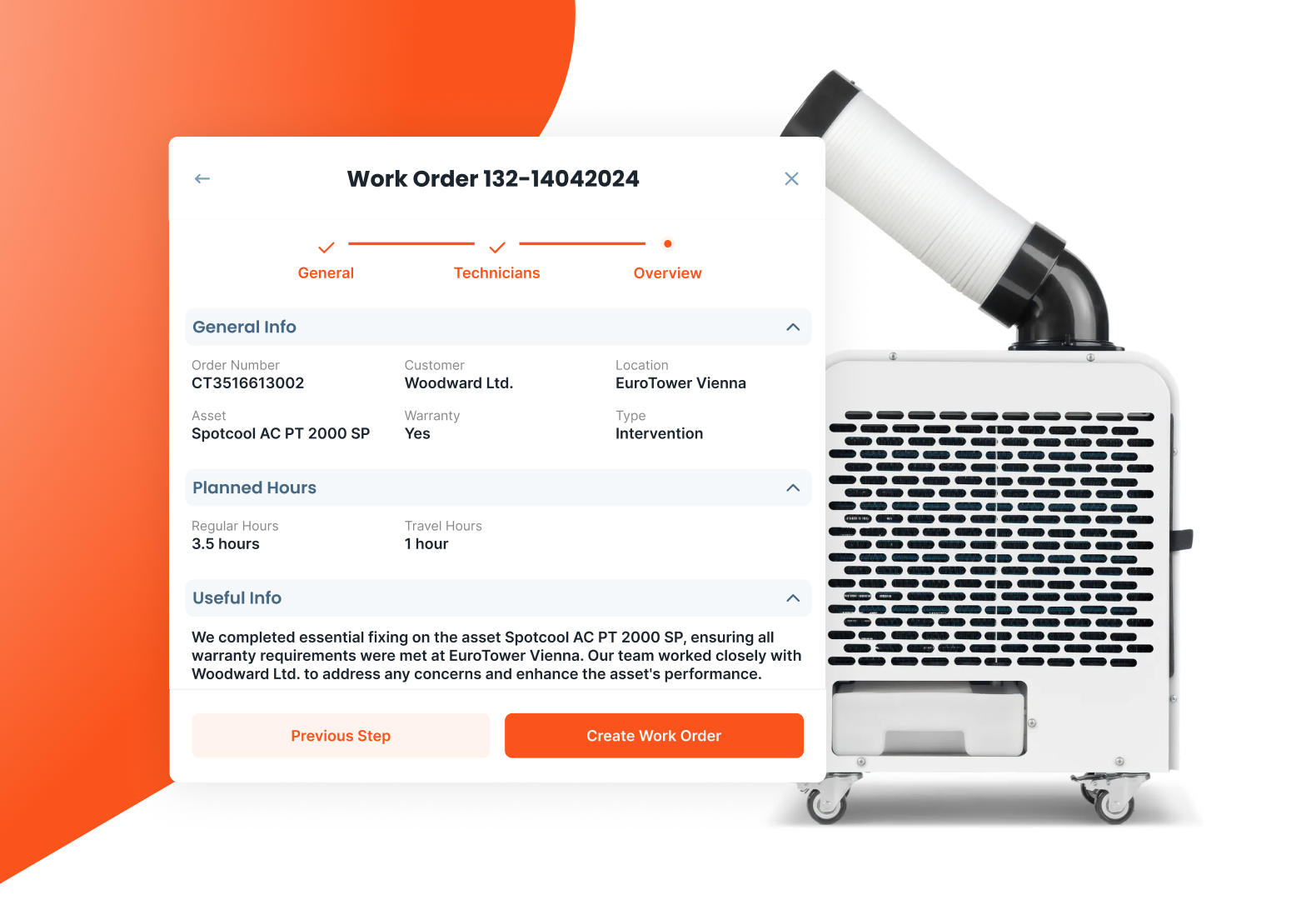
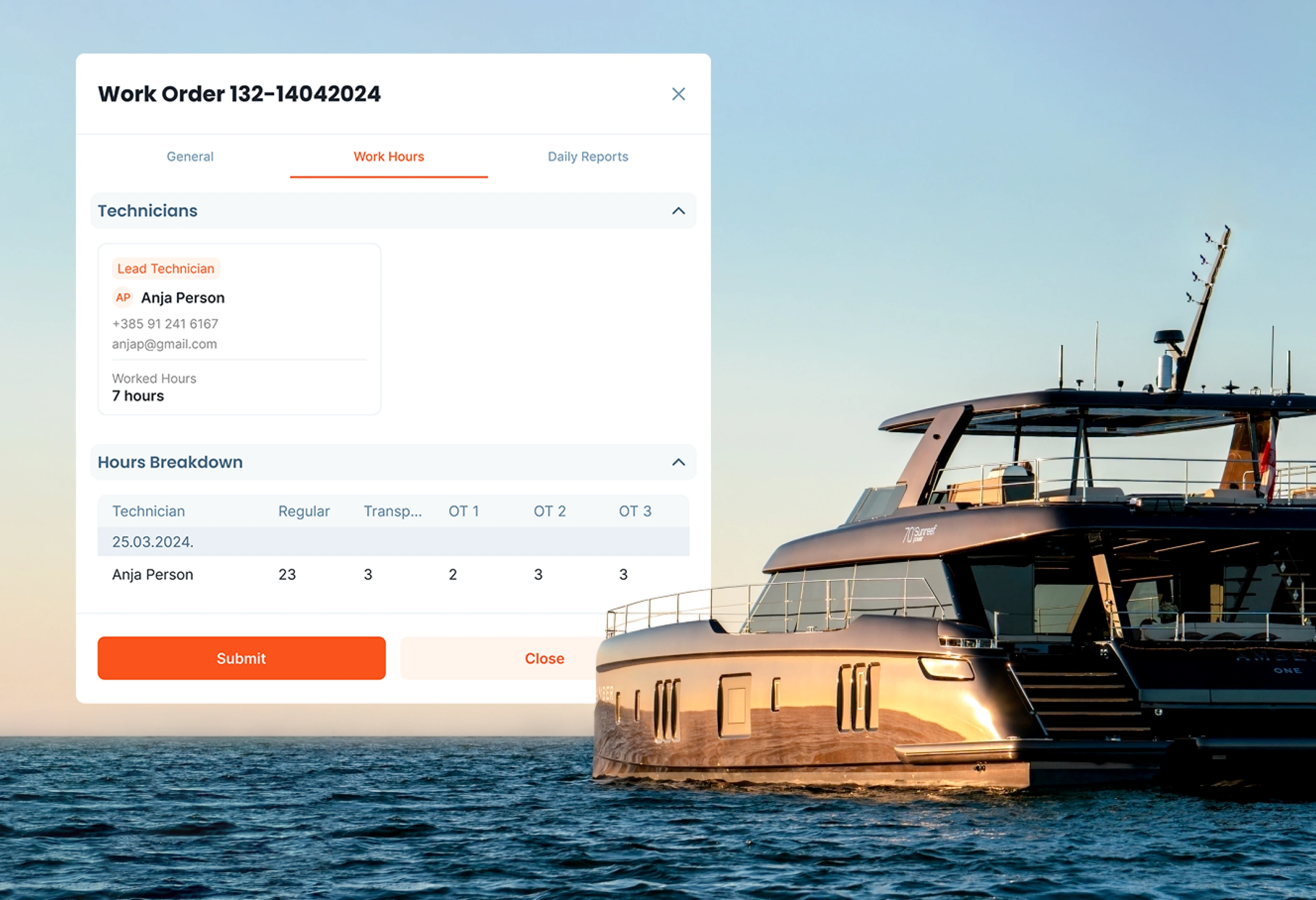
Work order management gives every item a responsible person, a deadline and a status. Spare parts are kept in inventory management and added to the work order, so you see which work order is waiting for a part. The regular engine service and antifouling are set up as preventive maintenance repeating every winter, and work hours tracking shows how much time went into which boat.
Serwizz does not book the travel lift slot at the marina, does not send orders to suppliers and is not a charter booking system. The manager enters the first check-in date as the deadline and builds the backwards plan. The system makes sure every item is written down, assigned and visible. More on use in charter and marinas is on the Serwizz for marine page.
The first check-in decides what you do this week
Winter boat service depends on knowing in November what to order and which boat needs the lift. Take one boat, collect its faults from the season in the table from this post and count backwards to the day the first order has to go out.
Request your Serwizz CMMS demo and bring the fault list of one boat, and we will build its winter plan together. If you prefer to try it yourself first, the free trial is open.